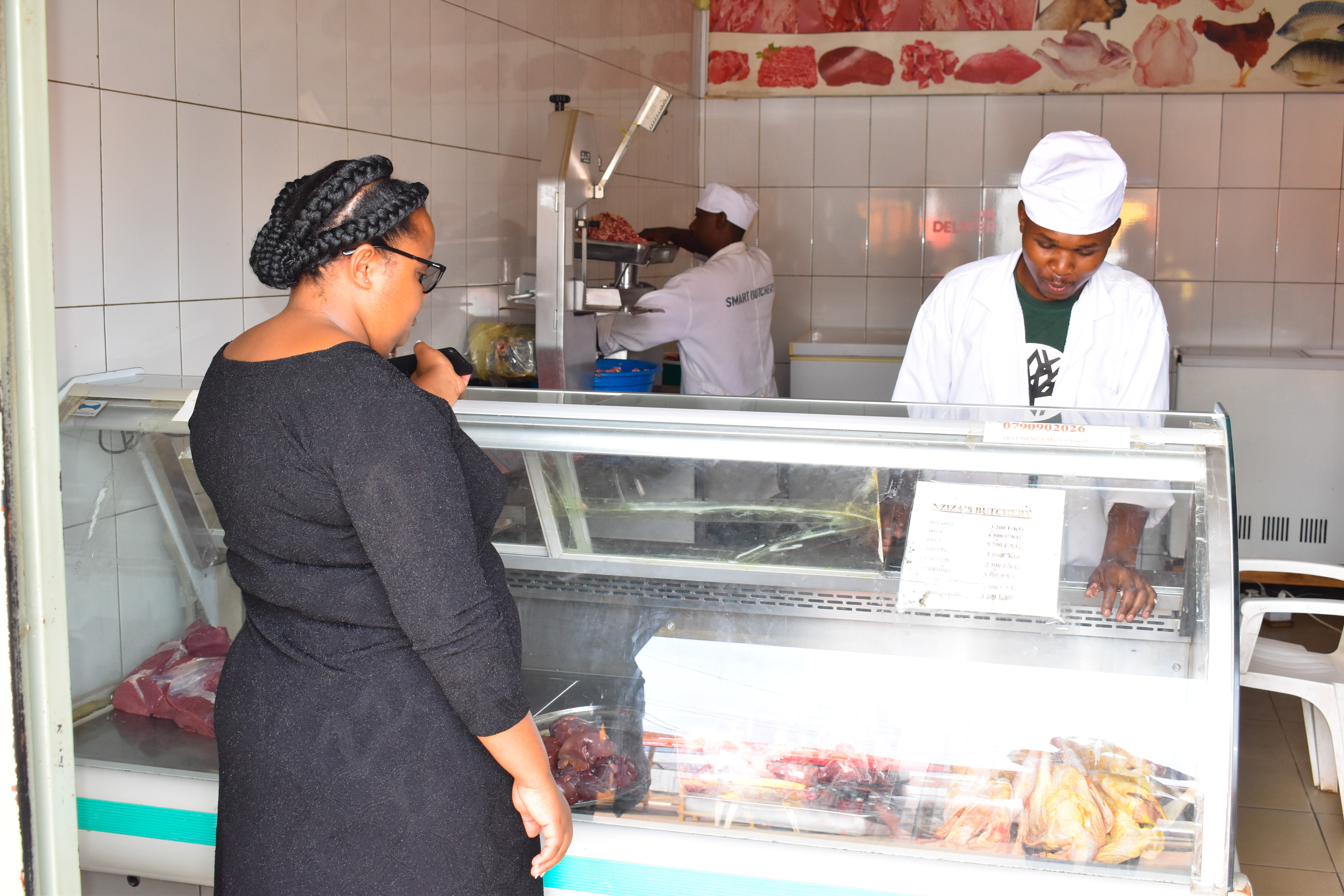
Banner image: a woman buys meat at a butcher shop in Rwanda.
This blog was originally posted on MarketLinks by Emmet Murphy, Technical Director, Agricultural Market Systems with Venture37.
Demand for meat has been growing in Rwanda and is likely to rise further as the country becomes increasingly urbanized and more affluent. However, meat safety remains a challenge. A 2021 quality inspection of 44 slaughterhouses and 152 meat retail shops by the Rwandan government revealed that only 27 percent of medium and large businesses met the “gold” standard, whereas none of the smaller operators were able to meet this standard. The majority of these (90 percent) fell into the appropriately named “gray” standard, with very low compliance characterized by poor animal and meat handling, limited documentation and record keeping, poor pest control and waste management measures, among other key findings. Armed with this data, the Feed the Future Orora Wihaze Activity — a five-year livestock market systems activity — partnered with the Rwanda Inspectorate, Competition, and Consumer Protection Authority (RICA), which regulates and inspects Rwanda’s meat industry to improve meat hygiene standards and reduce food-borne illnesses dramatically — protecting Rwanda’s consumers from unsafe food through a private sector engagement approach.
Although the percentage of stunted children under the age of five dropped from 38 percent in 2015 to 33 percent in 2022, the Rwanda Demographic and Health Survey shows that 36 percent of children in rural areas were stunted, compared to only 20 percent in urban areas. Land O’Lakes Venture37 — in collaboration with Catholic Relief Services, Market Share Associates, the Manoff Group, and Urunana — have been improving both the production and consumption of animal-sourced foods in Rwanda since 2019 through the Orora Wihaze Activity.
As rural producers, slaughterhouses, and rural meat slabs increase processing, hygiene remains a problem in Rwanda. A recent study conducted by Orora Wihaze identified the following constraints... Read the full blog post on MarketLinks.